Designing a Goals-Driven Fintech Platform
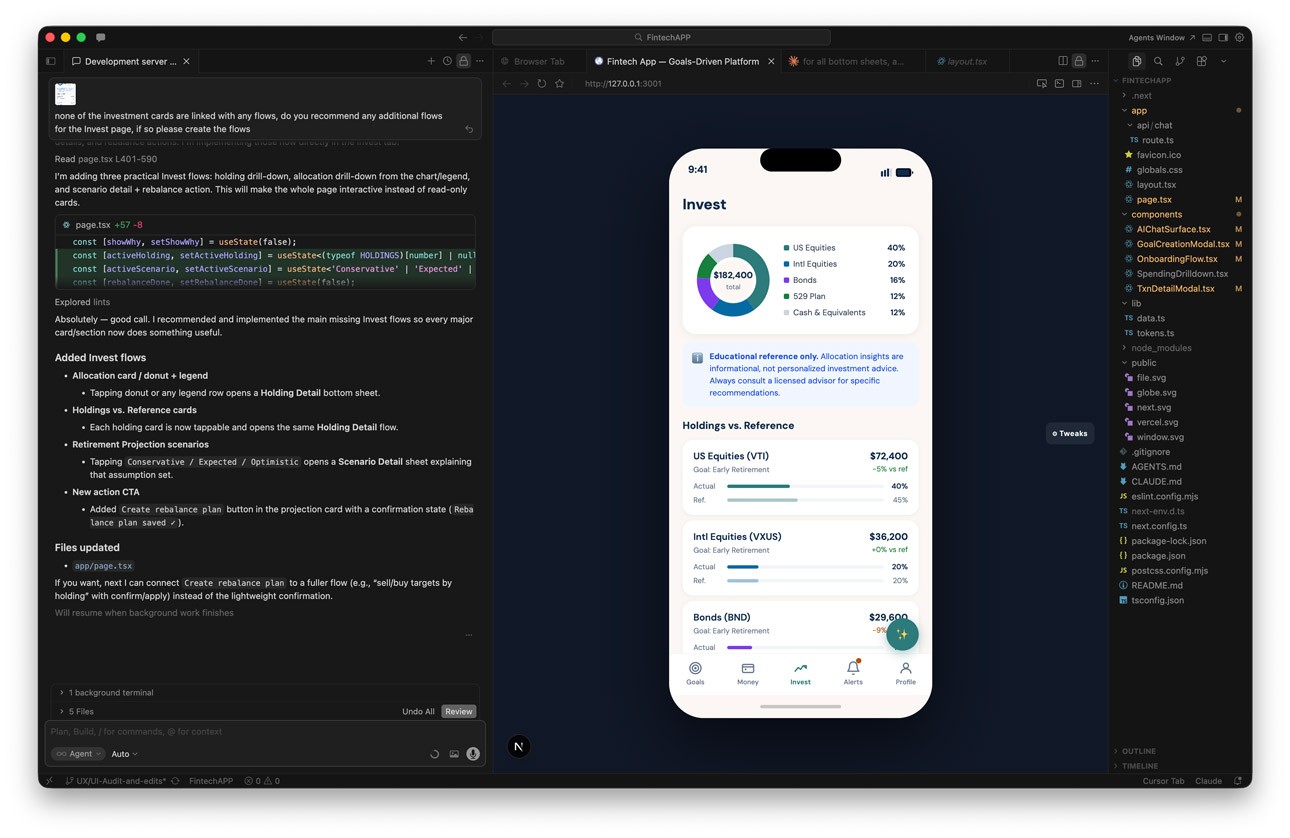
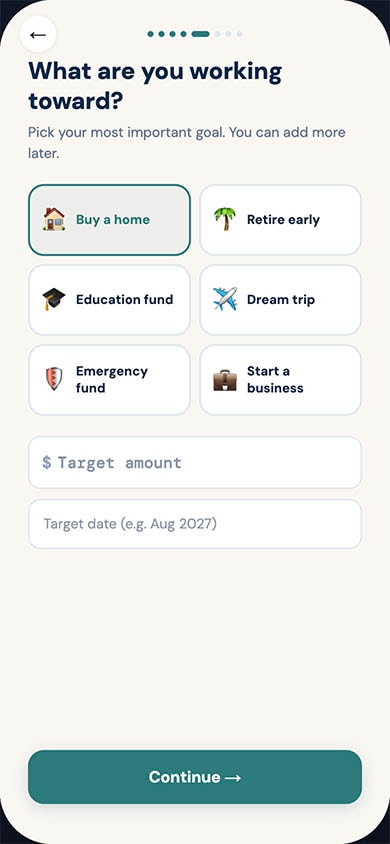
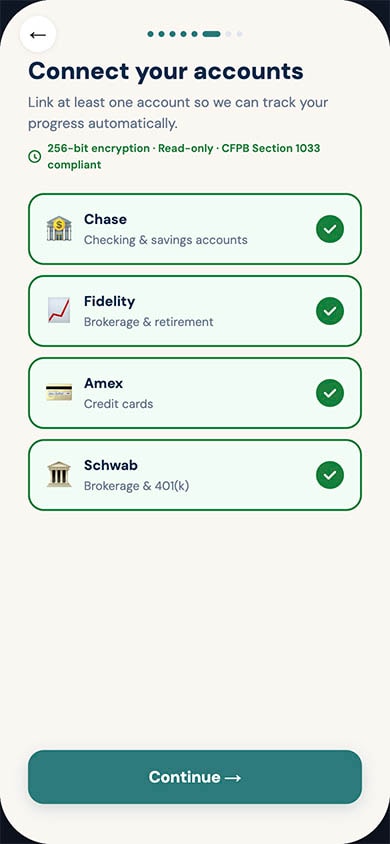
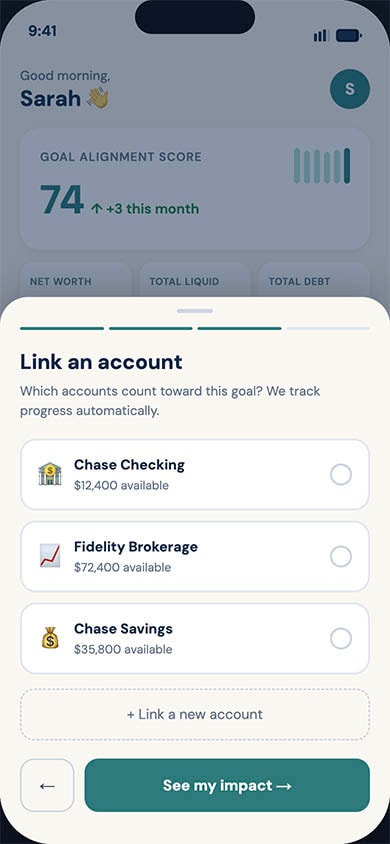
OverviewExisting personal finance management (PFM) tools overwhelmingly focus on retrospective budgeting or pure wealth aggregation. The product design for a new, goals-driven fintech platform that reframes money management around the user's life milestones rather than their account balances. By combining Open Banking data, transparent AI guidance, and compassionate design, the aim is to replace financial anxiety with agency.


The Problem
Most adults have access to capable financial tools, yet financial anxiety remains at record highs. Through our research and market analysis, we identified a structural mismatch between how finance is presented (accounts, transactions, percentages) and how humans actually think about money (the life they want to build).
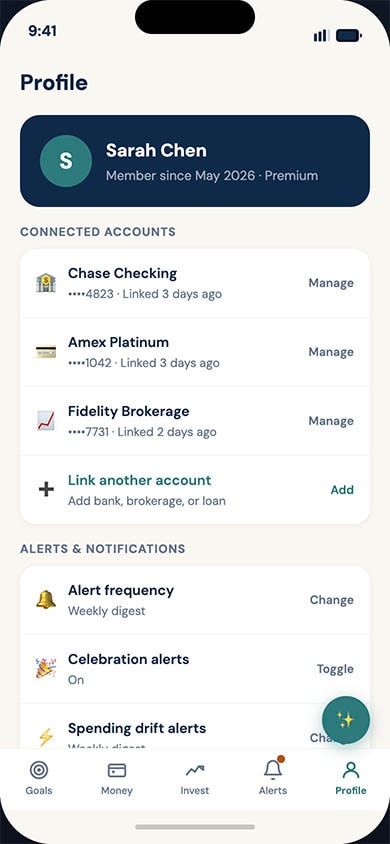
Users lacked a coherent narrative across their 3–7 average financial accounts. Furthermore, traditional budgeting tools rely on deficit framing ("you overspent"), which correlates with shame-driven avoidance. Users needed forward-looking, compassionate guidance to translate everyday spending into long-term goal impact.
Strategic Design Principles
To differentiate from rigid budgeting apps and complex trading platforms, I established core design principles to drive all UX decisions:
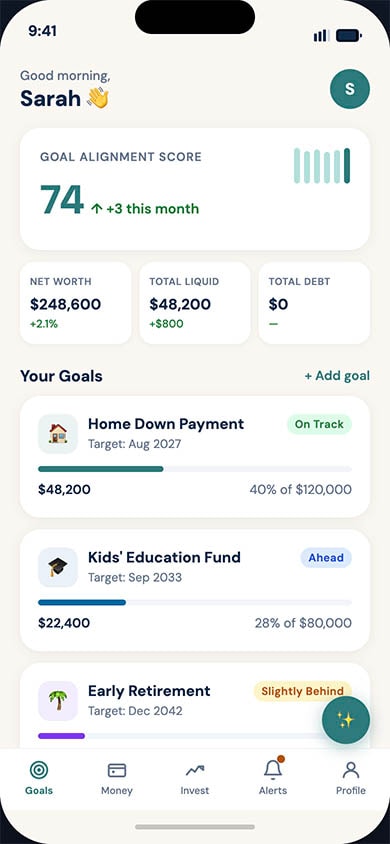
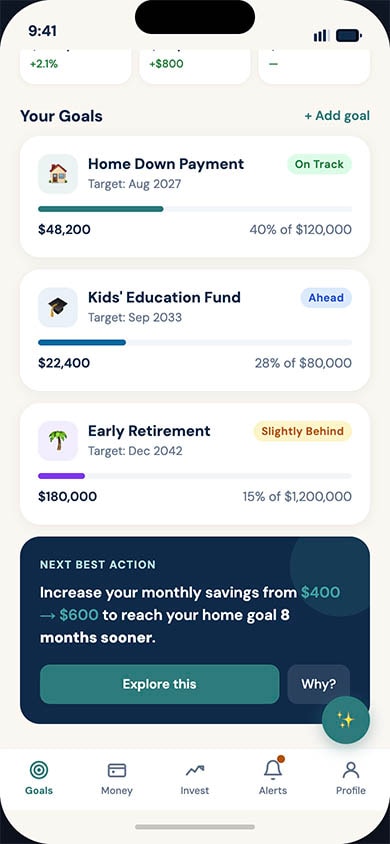
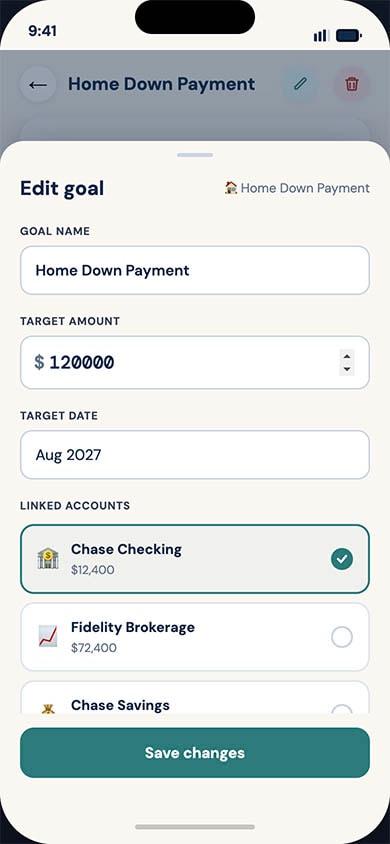
- Goals are the spine: Every screen renders financial state through the lens of user-defined goals, rather than making balances the headline.
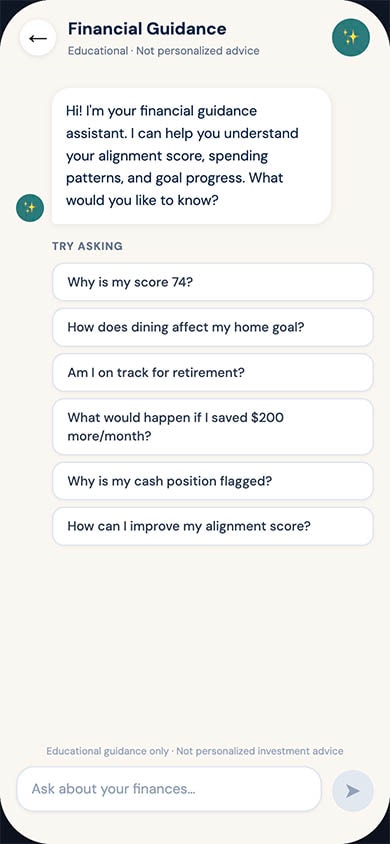
- Show the math: Every AI nudge, projection, and recommendation surfaces its reasoning in plain language via a "why?" affordance.
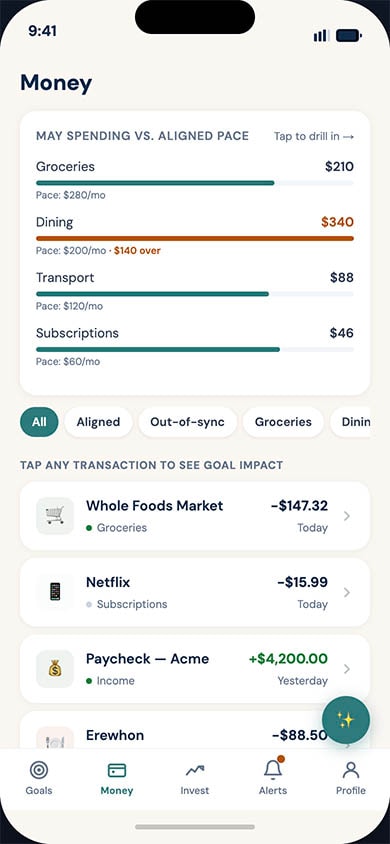
- Compassion over shame: No deficit framing, no leaderboards, and no streaks that punish breakage.
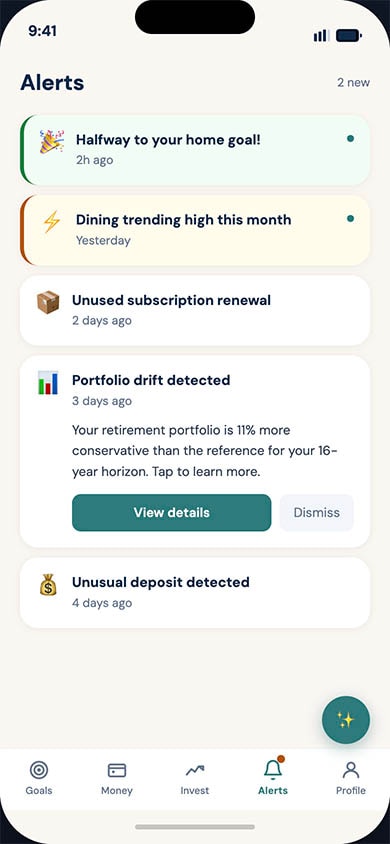
- Respect attention: Notifications are quiet by default, grouped intelligently, and must earn the right to interrupt the user.
Designing a Goals-Driven Fintech Platform
OverviewExisting personal finance management (PFM) tools overwhelmingly focus on retrospective budgeting or pure wealth aggregation. The product design for a new, goals-driven fintech platform that reframes money management around the user's life milestones rather than their account balances. By combining Open Banking data, transparent AI guidance, and compassionate design, the aim is to replace financial anxiety with agency.The Problem
Most adults have access to capable financial tools, yet financial anxiety remains at record highs. Through our research and market analysis, we identified a structural mismatch between how finance is presented (accounts, transactions, percentages) and how humans actually think about money (the life they want to build).
Users lacked a coherent narrative across their 3–7 average financial accounts. Furthermore, traditional budgeting tools rely on deficit framing ("you overspent"), which correlates with shame-driven avoidance. Users needed forward-looking, compassionate guidance to translate everyday spending into long-term goal impact.
Strategic Design Principles
To differentiate from rigid budgeting apps and complex trading platforms, I established core design principles to drive all UX decisions:
- Goals are the spine: Every screen renders financial state through the lens of user-defined goals, rather than making balances the headline.
- Show the math: Every AI nudge, projection, and recommendation surfaces its reasoning in plain language via a "why?" affordance.
- Compassion over shame: No deficit framing, no leaderboards, and no streaks that punish breakage.
- Respect attention: Notifications are quiet by default, grouped intelligently, and must earn the right to interrupt the user.
Designing a Goals-Driven Fintech Platform
OverviewExisting personal finance management (PFM) tools overwhelmingly focus on retrospective budgeting or pure wealth aggregation. The product design for a new, goals-driven fintech platform that reframes money management around the user's life milestones rather than their account balances. By combining Open Banking data, transparent AI guidance, and compassionate design, the aim is to replace financial anxiety with agency.The Problem
Most adults have access to capable financial tools, yet financial anxiety remains at record highs. Through our research and market analysis, we identified a structural mismatch between how finance is presented (accounts, transactions, percentages) and how humans actually think about money (the life they want to build).
Users lacked a coherent narrative across their 3–7 average financial accounts. Furthermore, traditional budgeting tools rely on deficit framing ("you overspent"), which correlates with shame-driven avoidance. Users needed forward-looking, compassionate guidance to translate everyday spending into long-term goal impact.
Strategic Design Principles
To differentiate from rigid budgeting apps and complex trading platforms, I established core design principles to drive all UX decisions:
- Goals are the spine: Every screen renders financial state through the lens of user-defined goals, rather than making balances the headline.
- Show the math: Every AI nudge, projection, and recommendation surfaces its reasoning in plain language via a "why?" affordance.
- Compassion over shame: No deficit framing, no leaderboards, and no streaks that punish breakage.
- Respect attention: Notifications are quiet by default, grouped intelligently, and must earn the right to interrupt the user.